Batteries are the powerhouse of scrap yards but carry severe hazardous waste and thermal runaway risks. Implementing strict storage and logistics safety codes is vital to prevent catastrophic fires and chemical spills.
Lead-Acid Storage: Acid Containment
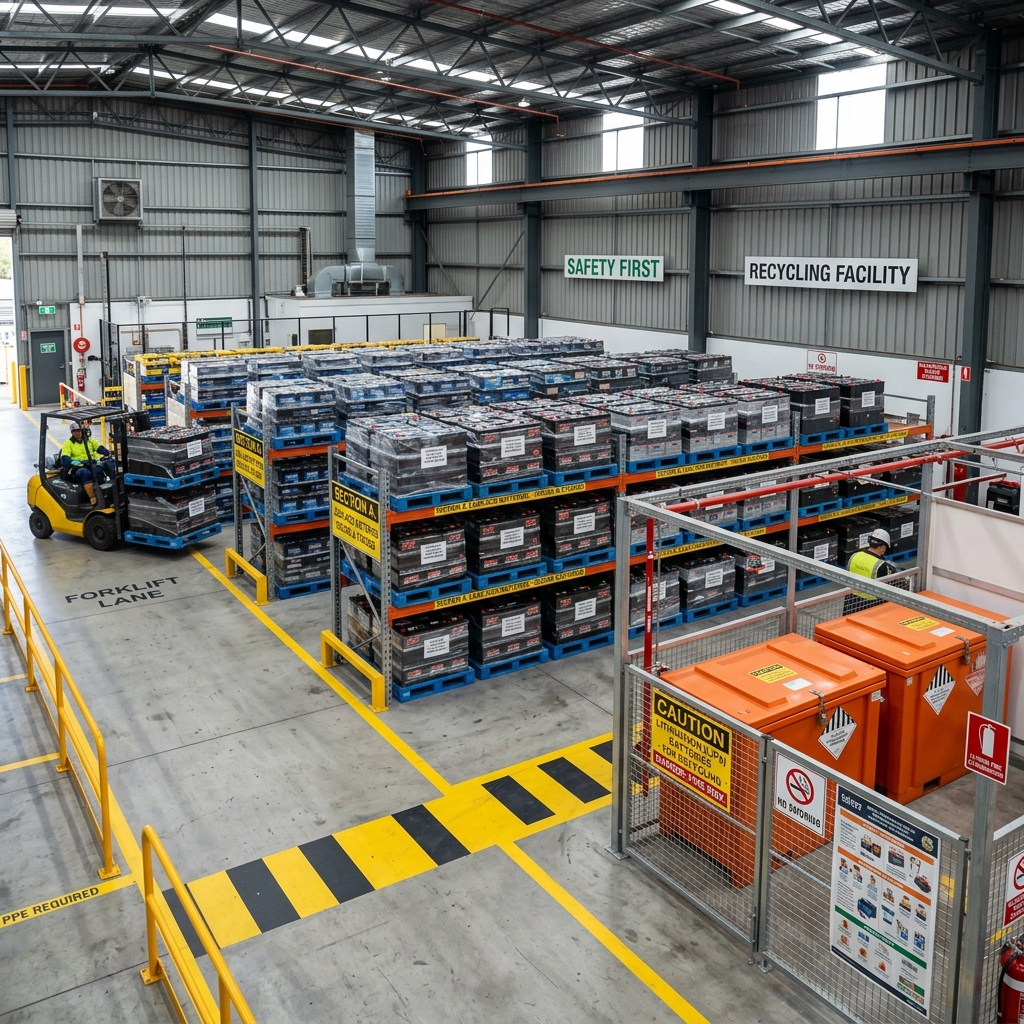
Car and industrial lead-acid batteries must always be stored on heavy-duty, acid-resistant plastic pallets with built-in sump containment basins. Stacking should be limited to three layers, separated by thick cardboard sheets to prevent terminal shorting. Any cracked or leaking casing must be immediately packed inside a sealed overpack drum.
"Acid spills not only cause severe chemical burns to staff but can result in massive environmental penalties if they reach the soil or storm drains."
The Lithium-Ion Threat: Thermal Runaway
Unlike lead-acid, lithium-ion battery scrap poses severe fire risks. If punctured, crushed, or exposed to moisture, lithium batteries can enter thermal runaway—an self-sustaining chemical fire that cannot be put out with standard water extinguishers. Lithium cells must be stored in cool, well-ventilated dry warehouses, packed inside vermiculite or fire-retardant dry sand.
Logistics and Certification
Transporting bulk battery scrap requires certified Hazardous Waste Manifests. Fleet drivers must be trained in chemical spill containment and carry appropriate safety kits on board at all times.