While mechanical recycling of plastics degrades material quality over a few loops, chemical recycling and advanced depolymerization are paving the way for infinite circularity of PET and HDPE containers.
The Degradation Trap of Mechanical Methods
Conventional recycling shreds and melts plastic bottles into pellets. However, each heating loop breaks the polymer chains, resulting in brittle plastic that must eventually be downcycled into lower-grade products like park benches or carpets. This is why chemical recycling is revolutionary.
Advanced Depolymerization Explained
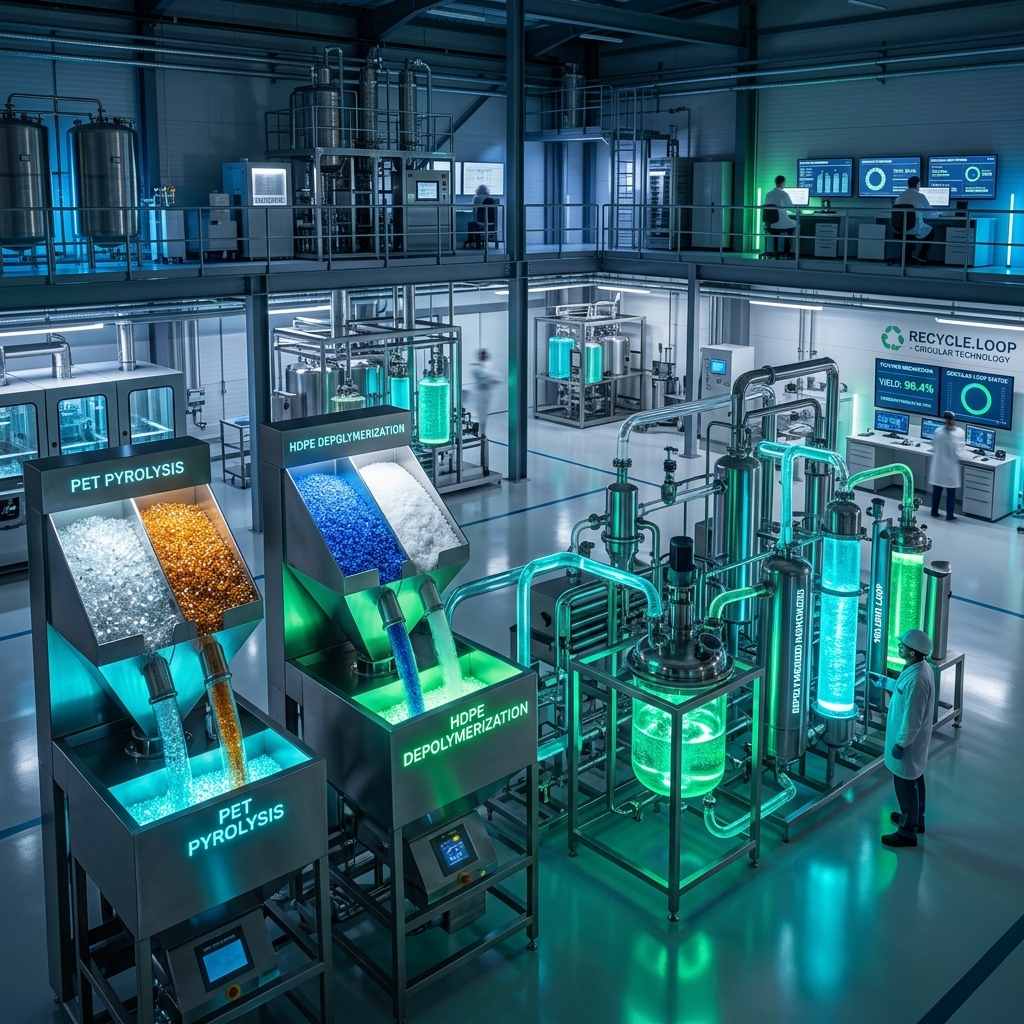
Chemical recycling breaks the plastic down to its basic chemical building blocks—monomers—using solvents, heat, and pressure. Recyclers filter out all dyes, labels, and adhesives at the molecular level. These pure monomers can then be repolymerized into virgin-quality plastic that is completely food-safe.
"Chemical recycling allows post-consumer PET bottles to be turned back into medical-grade trays and fresh food packaging, achieving 100% circularity."
Sorting Yard Requirements
To supply chemical recycling plants, yards must separate PET (Code 1) and HDPE (Code 2) cleanly. Optical sorting machines equipped with near-infrared (NIR) sensors are increasingly used to automate this process at high speeds.